+86 15253215219


- 21 Oct 2026
How to Launch Your Own Cat Litter Brand: A Step-by-Step OEM Guide
You want to sell litter under your own brand but aren't ready to build a factory. Good news: you don't have to. OEM manufacturing lets you launch a brand with minimal investment — if you know how it works.
What OEM Is and How It Differs from ODM
OEM (Original Equipment Manufacturer) — you come to a manufacturer with a ready concept: formula, packaging, brand. The factory produces the product under your brand.
ODM (Original Design Manufacturer) — the manufacturer develops the product itself, and you put your brand on it. This is cheaper and faster but gives you less control over characteristics.
Most brands start with ODM or a hybrid: they take the manufacturer's ready formula and adapt the packaging and scent to their market.
Step 1. Define Your Positioning
Before going to the manufacturer, answer three questions:
Who is your customer? A single-cat owner in an urban apartment or a breeder with five cats? The first cares about price and convenience; the second cares about consumption and odor control.
What segment are you in? Economy, mid-range, premium? For economy, a combined litter with corn starch will do. For premium — cassava with low dust and enhanced odor control.
Where do you sell? Marketplaces, pet stores, your own website, export? This determines packaging (e.g., for Wildberries you need the "Chestny Znak" marking).
Step 2. Choose Your Product Type
Main options to start with:
| Type | Pros | Cons | Best for |
|---|---|---|---|
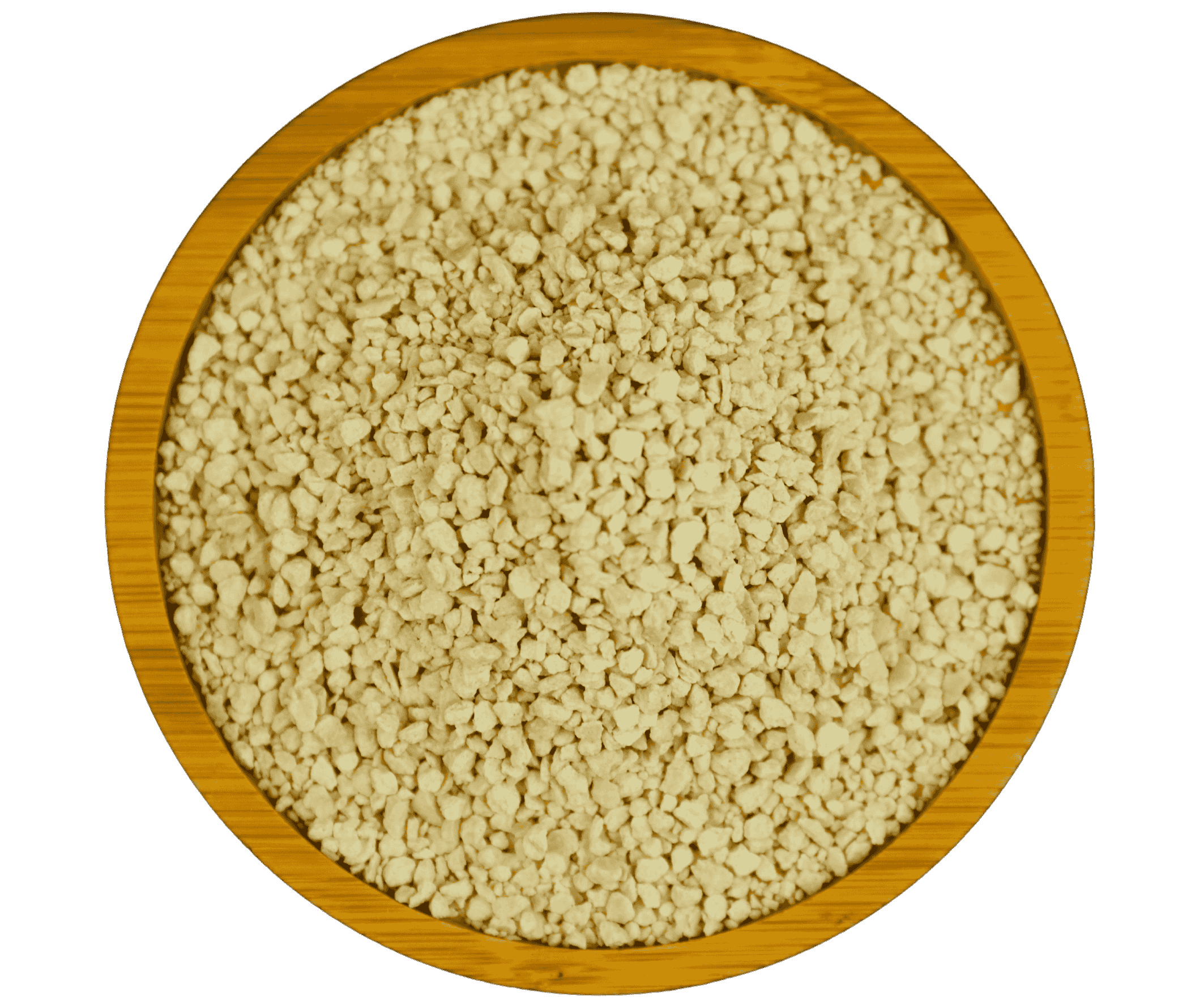
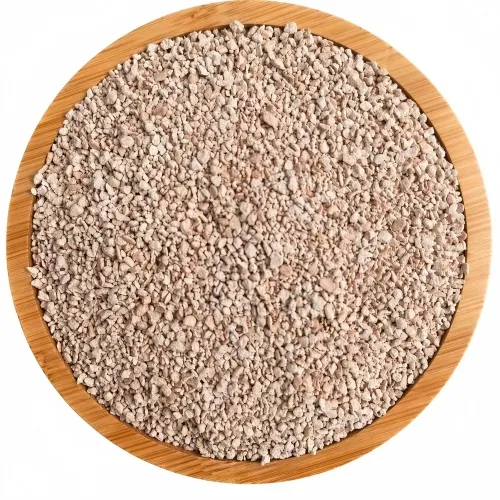
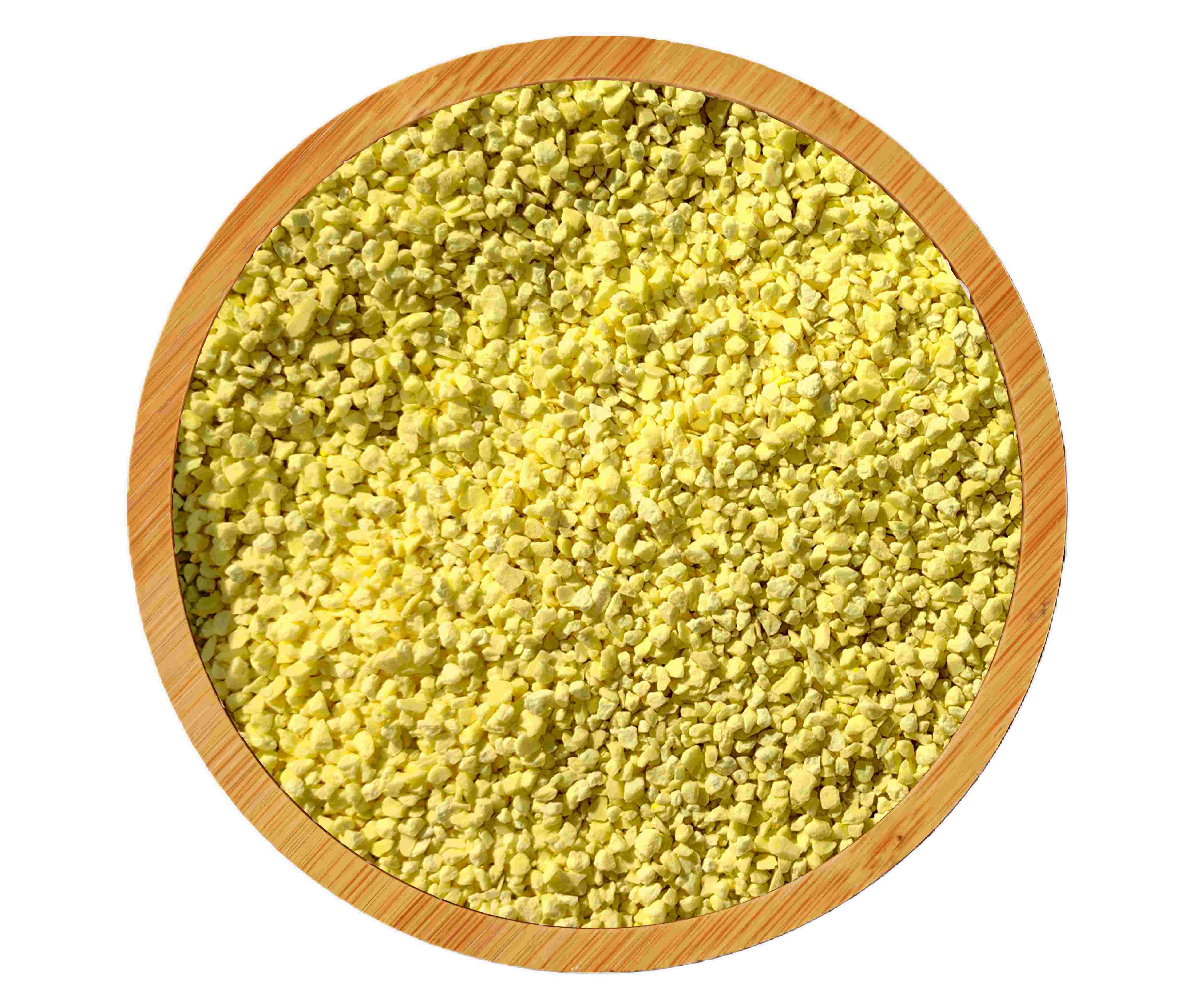
| Combined (cassava+tofu) | Balance of price and quality | Harder to explain composition | Mid-range |
| Tofu | Recognition, flushability | High competition | Mass market |
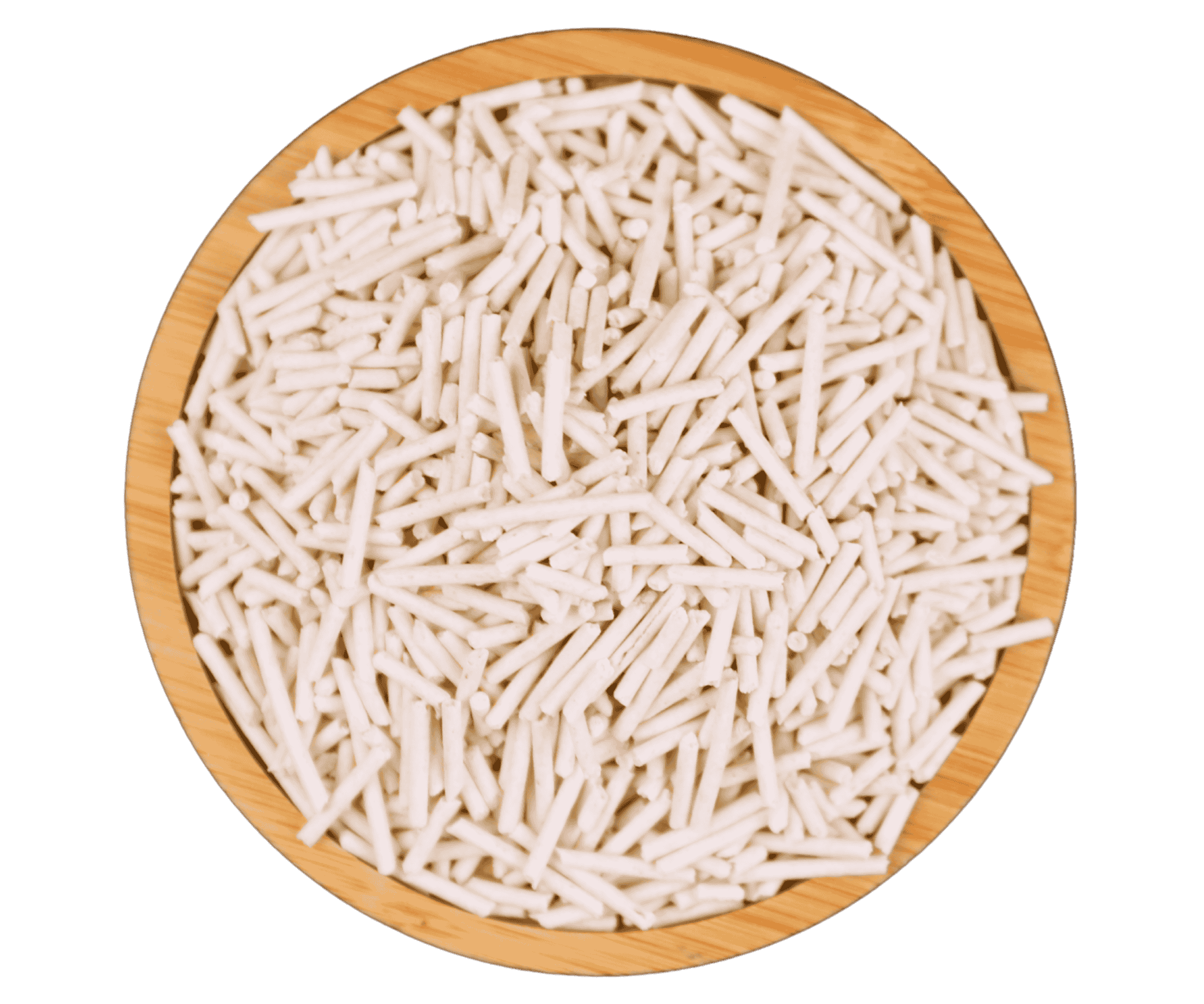
| Cassava | Low dust, premium perception | More expensive to purchase | Premium, export |
| Bamboo | Antibacterial properties | Less known | Eco-segment |
Tip: start with one SKU. Don't try to launch five positions at once — it will spread your budget and complicate logistics.
Step 3. Agree on the Formula and Samples
Ask the manufacturer for free samples of several formulas. Test them yourself:
pour into a tray and assess the dust;
add water and time the clumping;
leave for 3–5 days and smell it;
check whether granules stick to your hands after wetting.
If you have a cat — perfect. Its reaction will tell you more than any test report.
Step 4. Develop the Packaging
What packaging includes:
design (can be ordered separately or taken from the manufacturer);
material (polyethylene, kraft paper, laminated bag);
format (5 kg, 10 kg, 20 kg, big bag);
marking (composition, instructions, barcode, "Chestny Znak" for Russia).
What it costs: design — from 15,000 to 50,000 RUB; printing — depends on the run. At a run of 1,000 packages, the cost per unit is significantly lower than at 100.
Step 5. Determine the Minimum Order
The standard MOQ at most factories is one ton. That's roughly 200 packages of 5 kg or 100 of 10 kg.
If you want custom packaging, the MOQ may rise to 3–5 tons. Clarify this in advance — otherwise your budget won't add up.
Step 6. Check the Certificates
To sell in Russia, you'll need:
declaration of conformity or state registration certificate (depending on the category);
"Chestny Znak" marking for pet products;
test reports from the manufacturer.
For export to the EU — EU REACH, SDS, toxicology reports. Clarify whether the manufacturer provides these documents or whether they need to be arranged independently.
Step 7. Launch a Pilot Batch
Don't order 10 tons right away. Start with one ton, test it on your sales channel, gather feedback. If the product sells well — scale up.
Timeline: from approval to pilot batch shipment usually takes 2–4 weeks. If the manufacturer says "tomorrow" — that's suspicious.
What Launching Costs
| Item | Minimum | Optimum |
|---|---|---|
| Product (1 ton) | 3,800–4,600 CNY | 4,600–9,900 CNY |
| Packaging (design + printing) | 30,000 RUB | 80,000 RUB |
| Certification | 20,000 RUB | 50,000 RUB |
| Logistics | 15,000 RUB | 40,000 RUB |
| Total | ~100,000 RUB | ~250,000 RUB |
These are approximate figures. Actual cost depends on volume, region, and the chosen formula.
Common Beginner Mistakes
First. Saving on samples. "I'll test it on the first batch" is a bad strategy: if the product disappoints, the money is already spent.
Second. Ignoring marking. "Chestny Znak" is not an option but a requirement. Without it, the goods simply won't be accepted by marketplaces.
Third. Too wide an assortment at the start. One SKU perfected to excellence sells better than five "raw" ones.
Fourth. No feedback. Collect reviews from your first customers — it's free R&D.
Why It Works
OEM lets you launch a brand without capital investment in production. You pay for the product, not the factory. And the manufacturer handles the technology, quality control, and logistics.
The main thing is to choose the right partner. And that brings us back to the seven questions from the first article.