+86 15253215219


- 26 Oct 2026
How Food Waste Becomes an Export Commodity — and What It Means for Distributors
While some still debate whether "eco-friendly" litter is marketing or necessity, Chinese factories are quietly rebuilding supply chains. Pea and soy pulp, until recently considered production waste, are becoming raw material for litter that ships abroad by the tens of thousands of tons. Here's what's happening in the market and how it affects the shelf.
1. Waste That Stopped Being Waste
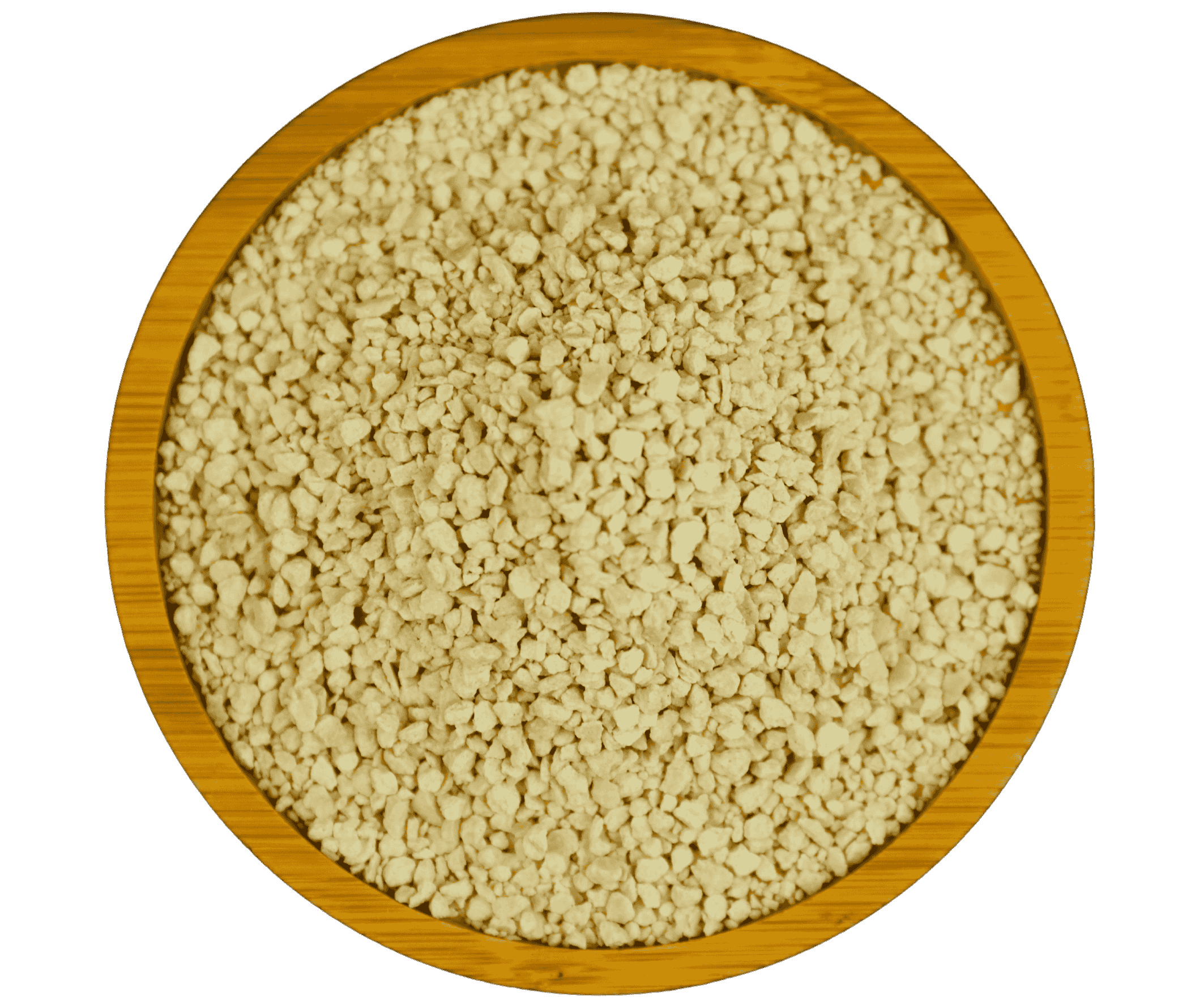
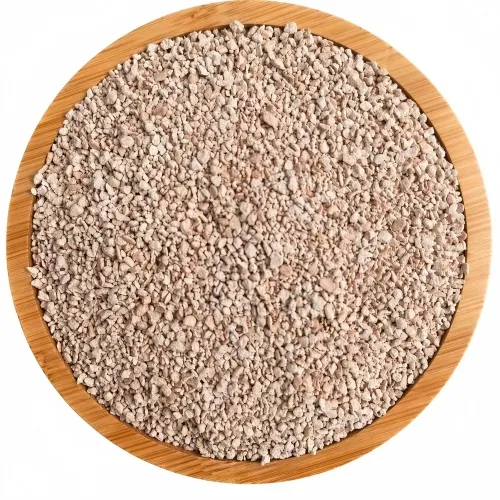
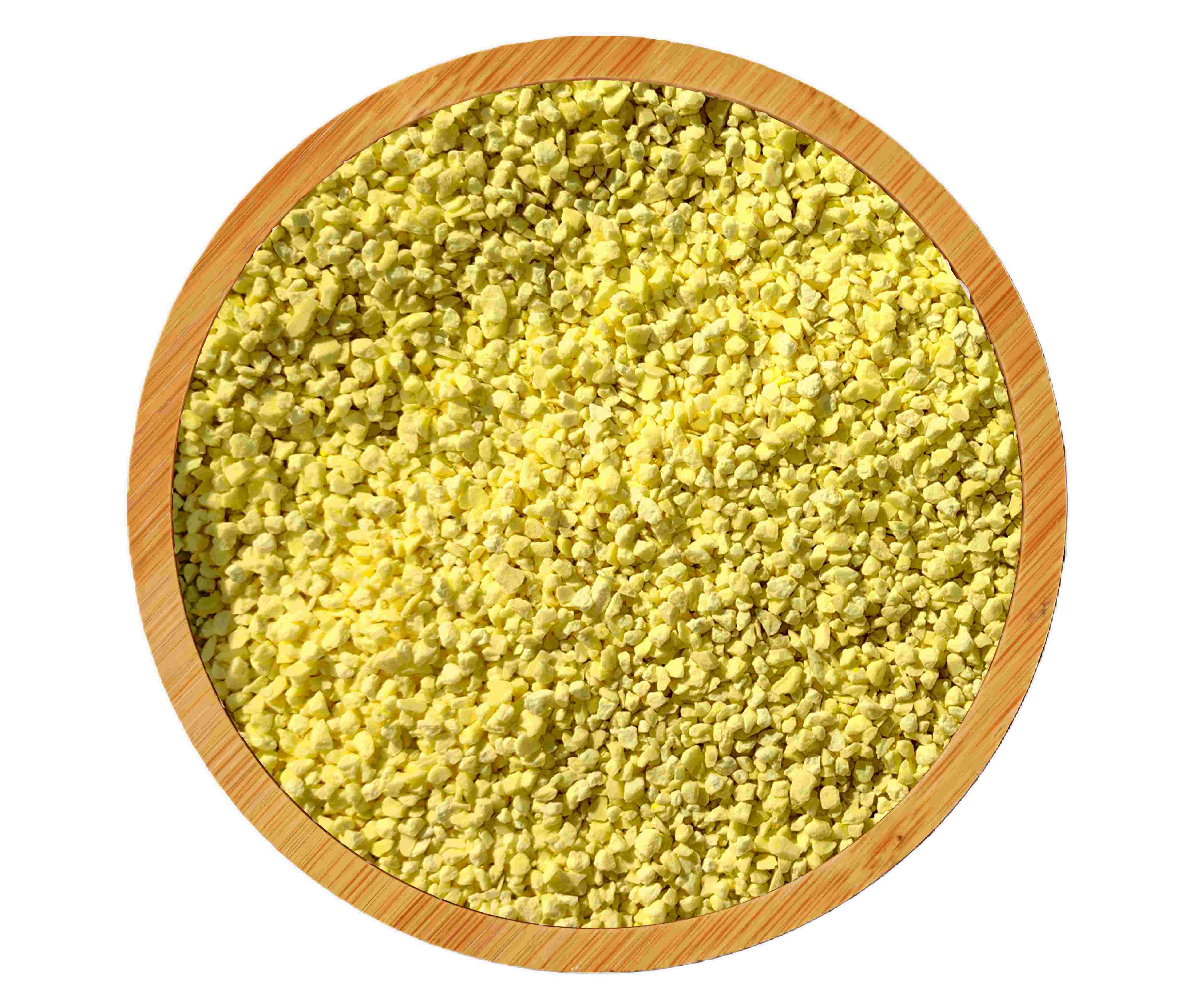
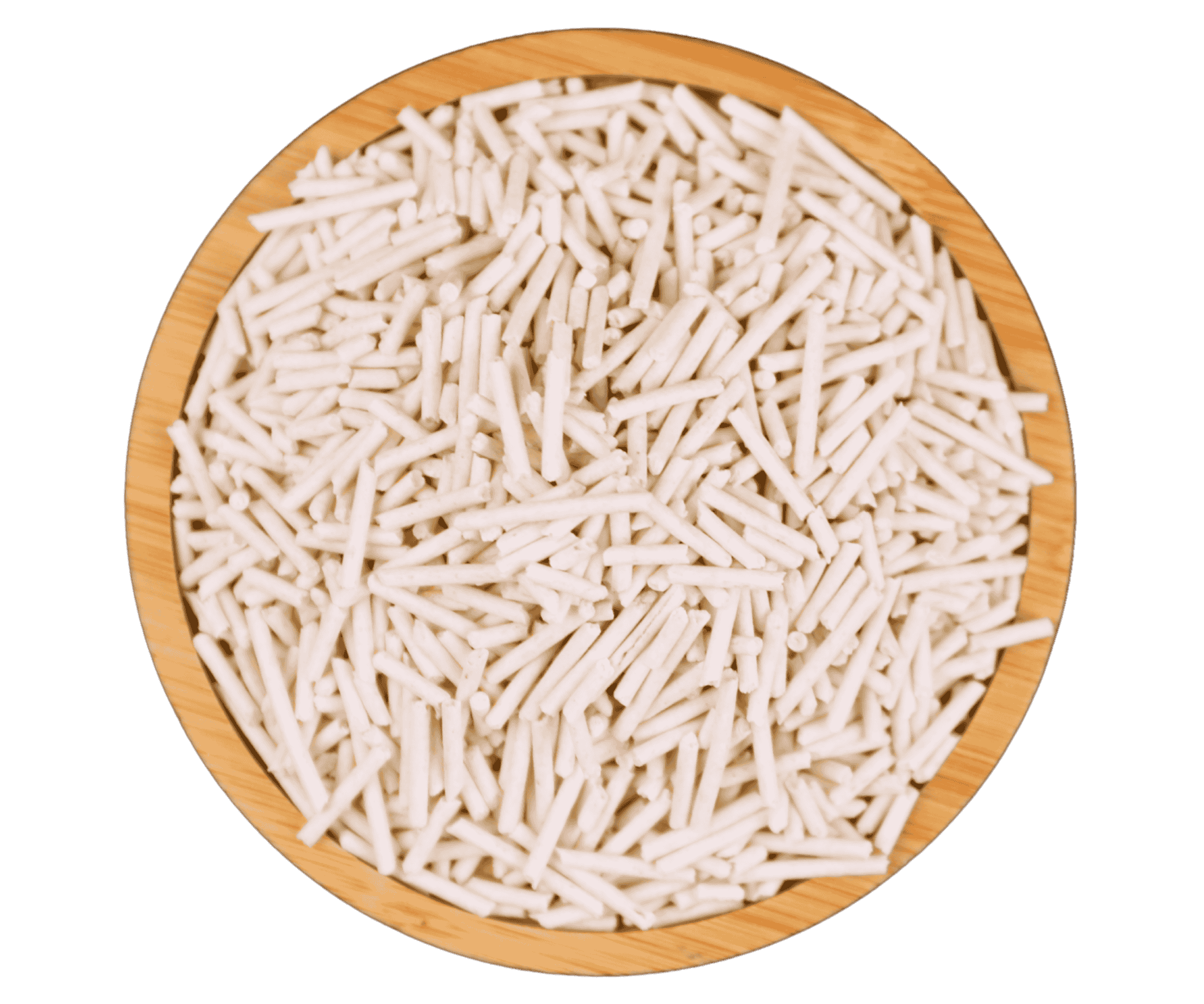
In Zhaoyuan County (Shandong Province), glass noodles have been made from pea starch for decades. After starch extraction, pulp remained — a low-value by-product. Today, it's turned into plant-based cat litter.
The mechanics are simple: pea fiber has high absorbency, forms a clump quickly, and fully biodegrades. Most importantly, it's food-grade raw material, safe if accidentally ingested. According to manufacturers, the product is in demand precisely because it's made from food ingredients.
A similar story is in Liaocheng, where soy pulp is turned into tofu litter. In just one year, more than 3,200 tons were exported to 13 countries, including Russia, the US, and Indonesia.
2. A Scale That's Hard to Ignore
Export figures speak for themselves. Through Yantai customs alone, 5.67 million tons of pea-based litter passed in the first nine months of 2026 — 33.4% more than a year earlier. One company increased exports by 41.8% to 6,523 tons in the first eight months.
But China isn't only about exports. Nanhe District (Hebei Province) accounts for about 60% of China's pet food production and sales and more than 30% of its cat litter output. It hosts 44 litter manufacturers, and the entire cluster is valued at around RMB 20 billion.
For distributors, this means one thing: supply is growing. And with it, competition for quality is growing too.
3. Why Switzerland Recommends Plant-Based Litter
While Asia ramps up exports, Europe is changing the rules. The canton of Zurich officially recommended that cat owners switch to plant-based litter. The reason isn't fashion — it's overflowing landfills.
Every year, Zurich sends about 9,000 tons of mineral litter to landfills. After incineration, it leaves slag that barely burns and yields no energy. Authorities estimate that roughly 10% of all slag in the canton comes from cat litter — that's 450 truckloads a year. Building new landfills is expensive and unpopular: when the plan was updated, 3,260 objections were filed.
Plant-based litter — from wood fiber, peas, soy, or grain residues — burns almost without residue. That's why Swiss authorities see it as a simple solution to the problem.
4. Quality: What the Roskachestvo Inspection Showed
Market growth doesn't eliminate old problems. In late October, Roskachestvo published results of a test of 20 wood-based litters across 21 parameters.
Good news: all samples were found non-toxic — no formaldehyde or metal-magnetic impurities were detected.
Problems remain:
Seven litters poorly retain odor.
Two contain excess technological dust.
Half become sticky after wetting — particles stay on the cat's paws.
Five brands met Roskachestvo's advanced standard: "Alisa," "Vash Vybor," "VkusVill," Zoonik, and "Goshka".
This result is a strong argument for distributors working with plant-based litter: if a manufacturer can confirm dust level, clumping speed, and non-stickiness, that becomes a real competitive advantage.
5. The Market Is Growing, but the Focus Is Shifting
According to QYResearch, the global plant-based cat litter market is projected to reach USD 2.77 billion by 2032, with a CAGR of 8.8%. But growth isn't the only thing changing.
The logic of choice is changing. A few years ago, price was the main argument. Today, distributors and brands increasingly look at:
verified characteristics (dust, clumping, odor control);
raw material origin (food waste vs virgin material);
certificates (ISO, REACH, toxicology);
supply stability (warehouse stock, shipping times).
These parameters increasingly determine whether a product makes it to the shelf or stays in the inbox.
6. Distributor Checklist: What to Look for in "Green" Litter
Raw material. Food-grade starch, pea or soy pulp, bamboo fiber. If the manufacturer uses food production by-products, that's a plus for both cost and ecology.
Dust level. ≤0.3%, with the best samples at ≤0.2%, and premium cassava at ≤0.1%.
Clumping speed. 3–5 seconds. More than 8–10 is weak for premium.
Behavior after wetting. Granules should not turn into a sticky mass.
Odor control. Benchmark — 95%+ in test results, not "fragrance on top."
Certificates. ISO 9001, ISO 14001, EU REACH, SDS, toxicology reports.
Biodegradability. If ecology matters for your market, choose a product that decomposes quickly and leaves no slag.
7. Why This Matters Right Now
October 26 isn't a holiday on the pet industry calendar. But it's on "ordinary" days like this that the market's direction becomes visible. Food waste is becoming an export commodity. Swiss cantons are recommending plant-based litter. Roskachestvo shows that quality is still uneven. And distributors get a rare opportunity: to choose not just "another litter" but a product with a clear story, verified characteristics, and real environmental meaning.
If you represent a brand or an export company looking for plant-based litter with food-grade raw materials, low dust, and stable supply — now is the time to request samples and compare.