+86 15253215219

- 13 Oct 2026
Preparing for Cold Weather — Why Indoor Air Quality Starts at the Litter Box
Mid-October is when windows close, heating turns on, and cats spend almost all their time indoors. In a sealed apartment, everything that used to "air out" stays inside: dust, odors, and waste products from your pet. That's why autumn is the best time to reconsider what's in your cat's litter box.
1. Why Indoor Air Changes in Autumn
As cold weather sets in, we close our windows. Ventilation becomes rare, and natural air circulation drops to a minimum. As a result, everything released indoors accumulates: moisture, carbon dioxide, volatile organic compounds, and dust.
For cat owners, this means one thing: what used to escape through the window now stays in the home. And cat litter is one of the main sources of fine dust and ammonia in an apartment.
According to the US Environmental Protection Agency (EPA), indoor air pollutant concentrations can be 2–5 times higher than outdoor levels. A study published in the Journal of Environmental Health found that cat litter dust contains inhalable particles smaller than 10 microns, which penetrate deep into the respiratory tract.
2. What Happens to Litter in a Closed Space
Traditional mineral litter (bentonite) raises a cloud of dust when poured or scooped. In the warm, dry air of the heating season, this dust stays suspended longer and settles on all surfaces — from windowsills to furniture.
Beyond dust, there's a second problem — ammonia. Cat urine decomposes under bacterial action, releasing ammonia. In a ventilated room, it escapes; in a closed one, it accumulates. This is not just an unpleasant odor but also irritation of mucous membranes in both people and animals.
Studies show that prolonged exposure to ammonia, even at low concentrations, can cause:
eye and respiratory irritation;
headaches;
asthma and allergy flare-ups;
worsening of mucous membrane condition in cats.
3. How Plant-Based Litter Solves the Problem
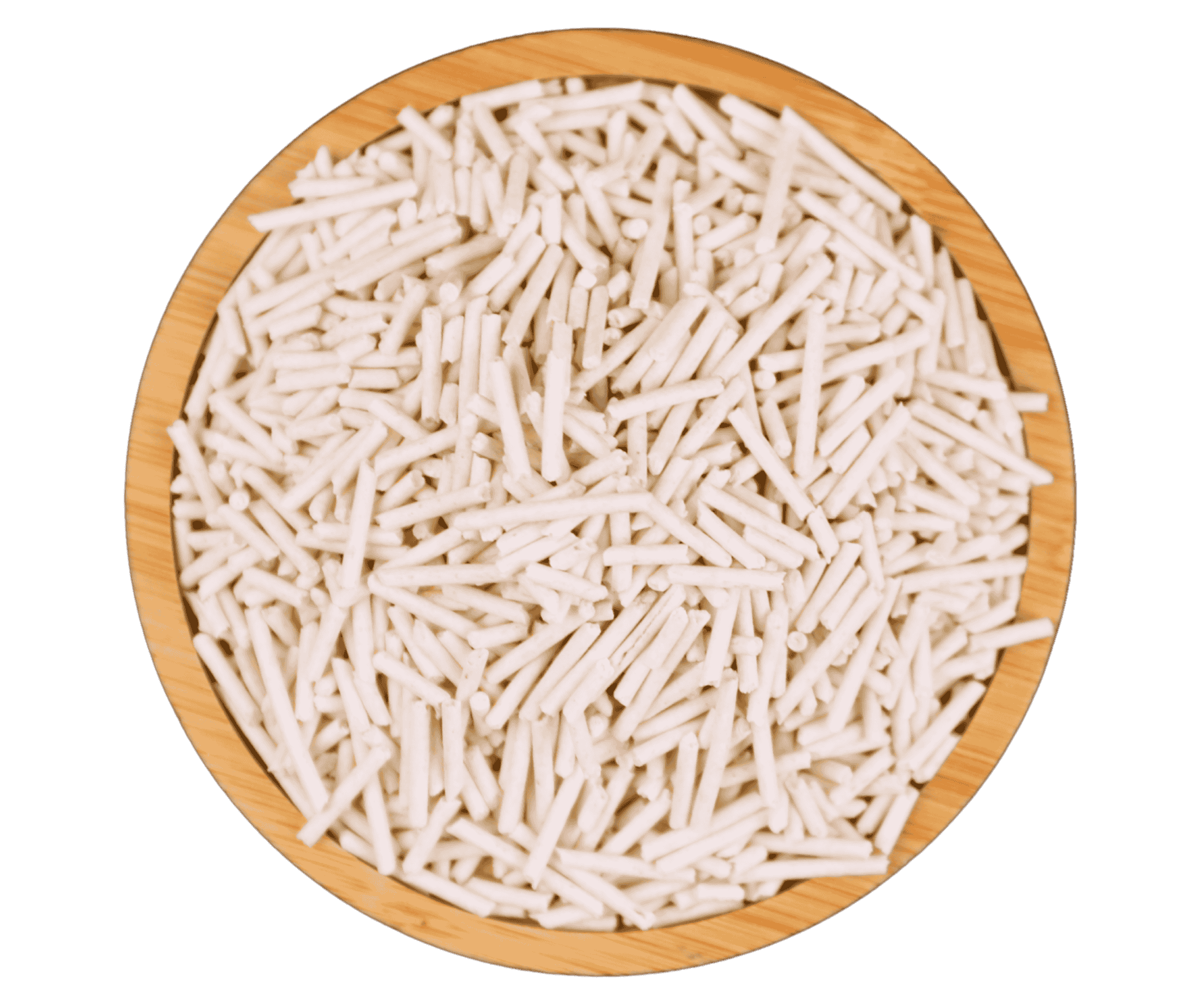
Plant-based litters made from cassava, tofu, corn starch, and bamboo have a structural advantage in closed spaces.
Less dust. Quality plant-based litters keep dust levels below 0.3%, with the best samples achieving ≤0.2%. For comparison: traditional bentonite can reach 1–3%. The difference is especially noticeable in autumn, when dust doesn't escape through open windows.
Adsorption instead of masking. Plant-based litters with seaweed extract and bio-enzymes don't mask ammonia with fragrance — they adsorb and break it down. This is crucial in a closed space: a strong fragrance combined with ammonia creates an even heavier mixture.
Fast clumping. The faster the litter forms a clump, the less time urine contacts the air and the less ammonia is released. A good plant-based litter clumps in 3–5 seconds.
4. What Else Matters in Autumn
Beyond litter choice, several habits help maintain indoor air quality:
Ventilate in short sessions. Even 5–10 minutes three times a day significantly reduces pollutant concentrations. In winter, it's better to ventilate often and briefly than rarely and long.
Scoop daily. Clumps should be removed immediately, not saved for the weekend. The longer urine stays in the litter, the more ammonia is released.
Change litter completely. Even good litter accumulates contaminants over time. Full replacement every 2–4 weeks is optimal.
Keep the box away from the bedroom and kitchen. This reduces exposure to both dust and odor.
Use a box with a filter or no lid. Covered boxes trap odor inside but release a concentrated dose of ammonia when opened. For covered boxes, a litter with high adsorption is especially important.
Humidify the air. Dry heating-season air worsens respiratory irritation. A humidifier helps both people and cats.
5. What This Means for Manufacturers and Brands
Seasonal demand for litter is a real factor. In autumn and winter, sales of low-dust, enhanced odor-control litters grow. This isn't about fashion — it's physics: in a closed space, litter characteristics are felt more acutely.
For manufacturers, this means several practical takeaways:
State the dust level — consumers increasingly look for this parameter.
Test the product in a closed space, not just in a lab.
Develop heating-season lines — with enhanced adsorption and low dust.
6. Checklist: Litter for a Closed Space
If you want your home's air to stay clean this autumn, look for:
Dust level — below 0.3%, ideally ≤0.2%.
Odor control method — adsorption and enzymatic breakdown.
Clumping speed — fast, so urine doesn't linger in the air.
Composition — food-grade starch, soy fiber, bamboo, cassava.
No strong fragrances — odor should be neutralized, not covered up.
7. Why This Matters on October 13
October 13 is mid-autumn. The heating season has already started in most regions, windows are closed, and cats spend almost all their time indoors. This is the moment when litter quality stops being an abstract parameter and becomes part of everyday quality of life — for both the cat and its owner.
Clean indoor air starts with small things — with what's in the litter box. And choosing the right litter is one of the simplest decisions you can make today.