+86 15253215219


- 26 Nov 2026
Cat Litter Additives: How to Build a Line from Functional to Premium
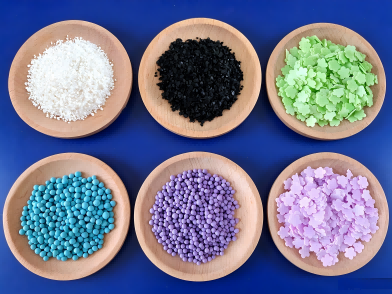
The same litter can sell in different segments — if you choose the right additives. White seaweed granules, activated charcoal, colored balls, and petals are not just "packaging decoration." They're a segmentation tool that lets a brand cover several price niches without changing the base formula. Here's how it works.
1. Why Additives Matter
Cat litter is a category where buyers choose with their eyes and nose. They rarely get to "try" a product before buying. That's why visual and functional differences on the shelf play a huge role.
Additives solve three problems:
Functional. They enhance odor control, adsorption, and freshness.
Visual. They make the product stand out on the shelf and become recognizable.
Segmentation. They let a brand offer several product lines at different levels without developing new formulas from scratch.
The third task is especially important for distributors and brands that want to expand their assortment without increasing production complexity.
2. White Seaweed Granules: The Functional Foundation
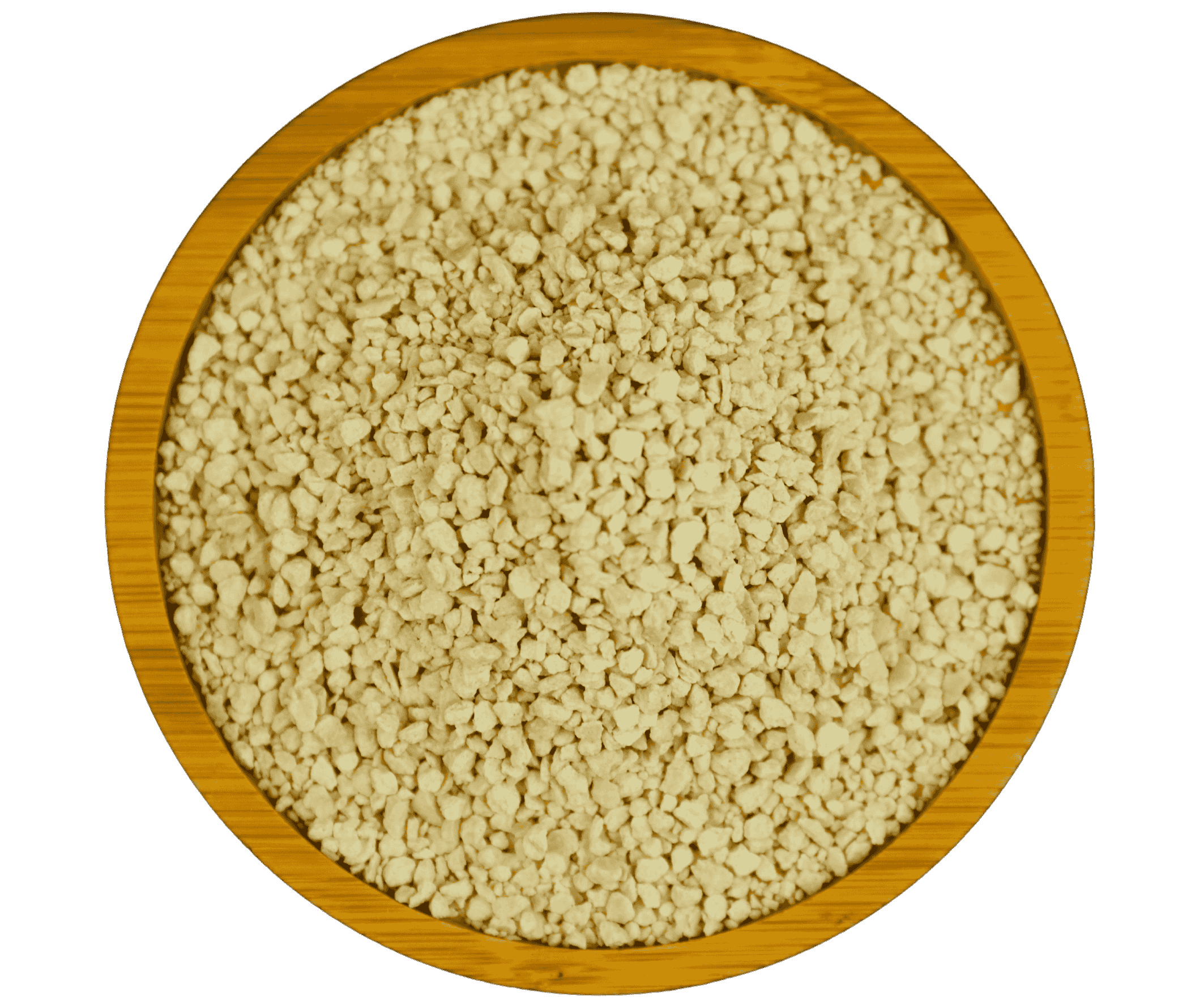
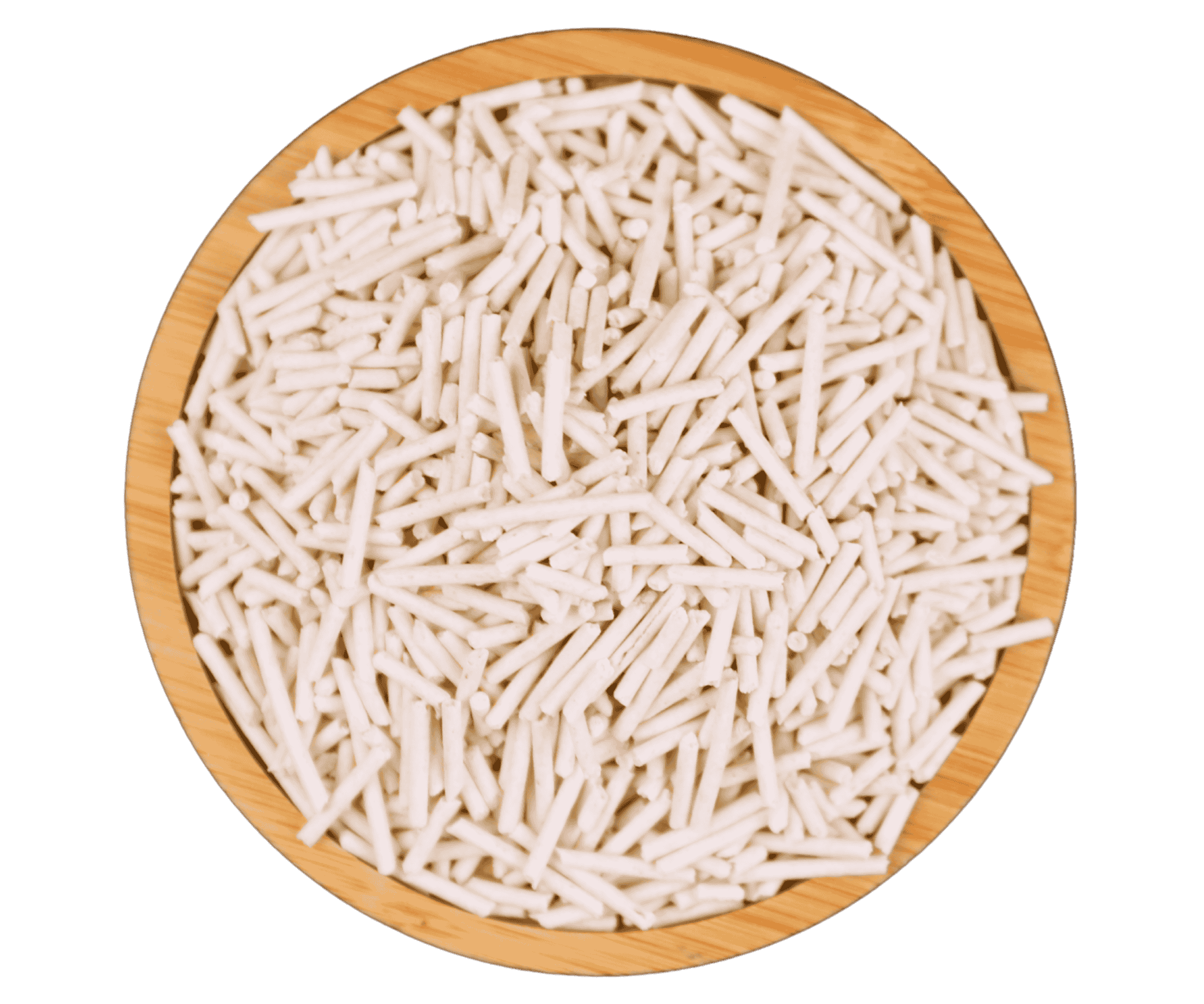
This is not a budget litter. Gilancy's white granules are deodorizing granules based on seaweed — a product with high added value. They are designed to enhance odor control and can be used as a standalone product or in combination with other additives.
What this gives:
Natural ammonia adsorption thanks to seaweed.
High odor removal efficiency (up to 98.1% in complex formulas).
Neutral white color that doesn't "stain" the litter box or leave marks.
The ability to use in both premium and functional lines.
Important: white granules are not a "base for the economy segment." They are a full-fledged product that can be positioned as:
a standalone deodorizing litter;
a functional additive to other litter types;
a component of premium blends.
How to position: "natural deodorization," "enhanced odor control," "seaweed for freshness."
3. Activated Charcoal: Enhanced Adsorption
Retains the main properties of regular litter but is additionally enhanced with adsorption.
Activated charcoal is a classic of adsorption. Its porous structure captures odor molecules, including ammonia from urine. This is not masking with fragrance but physical absorption.
Pros:
Better absorbs odors, especially urine odor.
Suitable for multi-cat households.
Perceived by buyers as a "functional" product.
Cons:
Possible slight dark residue from charcoal dust.
Best for: mid-range, "enhanced odor control" lines, multi-cat households.
How to position: "enhanced formula," "for multi-cat homes," "more adsorption — less odor."
Important: dark residue is not a defect but a feature. If explained properly on the packaging, the buyer will perceive it as proof that charcoal is present. Transparency works better than trying to hide it.
4. Colored Balls: Premium and Visual Identity
Colored balls (purple, blue) are an aesthetic and memorable format.
This is a product for those who want the litter to look "different from everyone else's." Colored balls can serve several functions:
Premium positioning. Visually, the product is perceived as more complex and expensive.
Color coding. Purple — lavender, blue — freshness. Color helps the buyer quickly navigate the line.
Scent association. Color can match the scent: purple — lavender, blue — sea freshness.
Pros:
Noticeable on the shelf.
Memorable.
Allow building a line with multiple variants.
Best for: premium segment, scented lines, gift sets.
How to position: "premium care," "scent and freshness," "visual accent."
5. Petals: A Shape That Sells
Petals (green, pink, yellow) are a shaped litter in the form of petals.
This is the most visually unusual option. It looks more attractive than standard granules and suits the mid and premium segments.
Pros:
Attractive appearance.
Suitable for eco-positioning (green petals).
Works well in gift and seasonal sets.
Creates an emotional connection with the buyer.
Best for: mid and premium segments, eco-lines, seasonal collections.
How to position: "natural aesthetics," "gentle care," "a shape you notice."
6. How to Build a Line: Three Scenarios
Additives can be used as separate products or combined. Here are three ready-made scenarios for a brand.
Scenario 1. Functional Line
Product: white seaweed granules.
Segment: mid and premium.
Positioning: "natural deodorization based on seaweed."
Scenario 2. Enhanced Formula
Product: white seaweed granules + activated charcoal.
Segment: mid and premium.
Positioning: "double adsorption: seaweed + charcoal for maximum odor control."
Scenario 3. Premium Line
Product: white seaweed granules + colored balls or petals.
Segment: premium.
Positioning: "premium care with scent and visual identity."
You can combine even more complexly: for example, white granules + charcoal + petals for an "eco-premium" line. But the main rule is don't overload. Every additional element must have a clear function or reason to be on the packaging.
7. What Matters for Distributors
First. Additives allow expanding the assortment without developing new base formulas. This saves time and resources.
Second. Visual differences help sell online, where the buyer can't touch the product. Colored balls and petals stand out in photos.
Third. Combinations of additives create the impression of a "complex" product, which justifies a higher price.
Fourth. Transparency about features (e.g., dark residue from charcoal) builds trust. It's better to explain in advance than to get a negative review.
8. Why This Works
The litter buyer chooses not only function but emotion. White seaweed granules are "natural power and freshness." Charcoal is "maximum adsorption." Colored balls are "beautiful and pleasant." Petals are "unusual and gentle."
Additives allow a brand to speak to different buyers on the same shelf without diluting the core product. And that's what makes them a powerful tool for building a line.
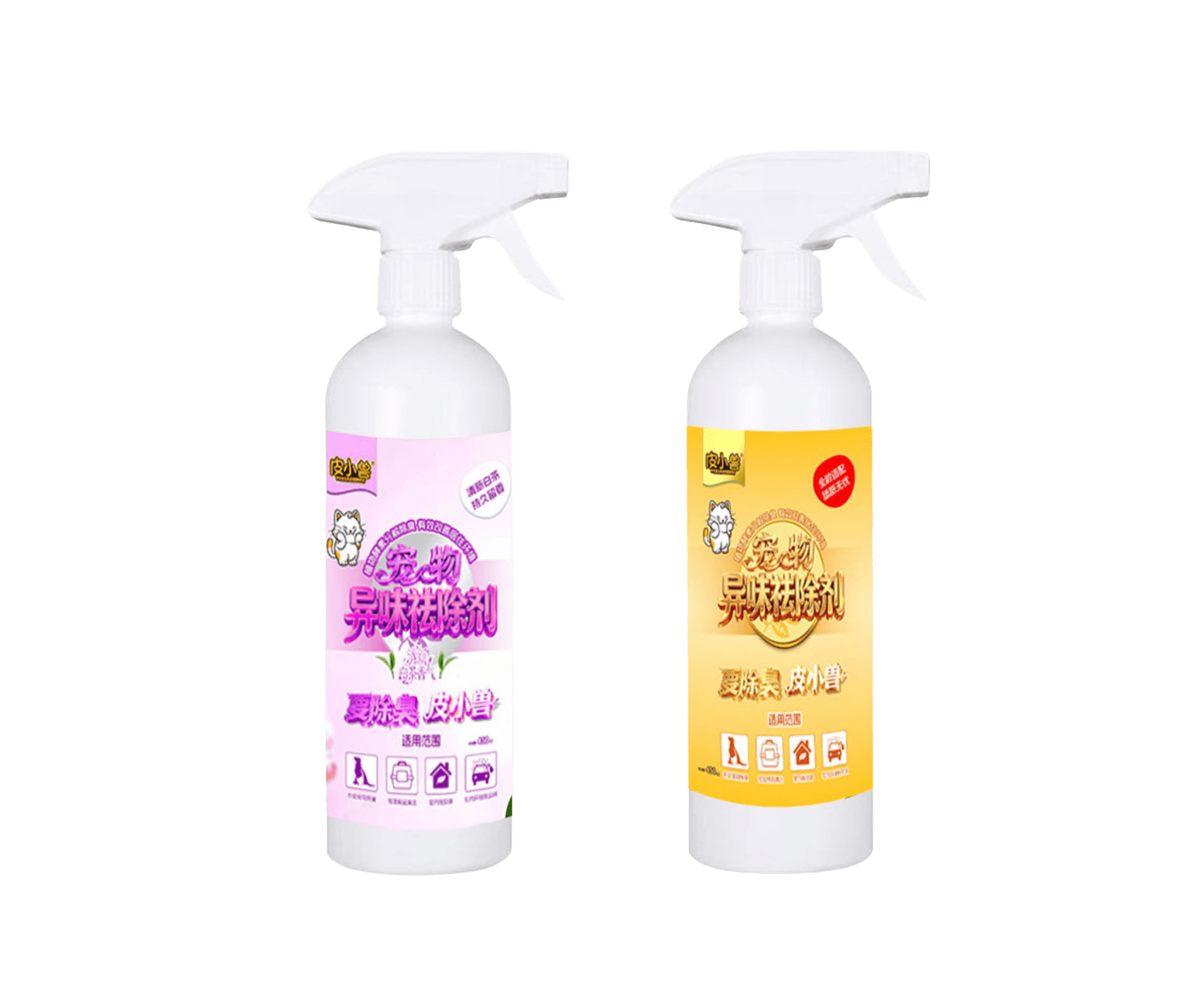
About the Author: Gilancy is a manufacturer of plant-based cat litter from Qingdao, China. The product range includes cassava, tofu, bamboo, and combined litter, as well as seaweed deodorizing granules, bio-enzyme spray, seaweed deodorizing powder, and Mineral Sand Blend (A‑K). The company offers litter additives: white seaweed granules, activated charcoal, colored balls, and petals. Products are made from food-grade raw materials. OEM and wholesale supplies.