+86 15253215219

- 13 Apr 2026
Stop Masking Odor — Start Eliminating It
Why Most Cat Litter Is Solving the Wrong Problem
For cat owners, odor control is often the top priority when selecting cat litter. This has led to a market filled with products promising fresh scent, long-lasting fragrance, and instant deodorizing effects.
However, many of these solutions are built on the wrong approach. Instead of eliminating odor, they are designed to mask it.
For distributors, retailers, and brand owners, understanding this difference is key to choosing products that truly deliver long-term value.
The Real Source of Odor
Odor in the litter box is caused by the decomposition of urine and waste, which produces ammonia and bacteria.
According to the American Veterinary Medical Association, ammonia exposure in enclosed environments can affect both pet and human health, especially when ventilation is limited.
If these compounds are not broken down, odor will continue to return regardless of how strong the fragrance is.
This is why masking odor does not solve the problem—it only hides it temporarily.
How Most Cat Litter Works
Many traditional cat litters rely on artificial fragrance to cover bad smells. While this may create a short-term perception of freshness, it does not remove the odor at its source.
Some products incorporate materials such as activated carbon to absorb odor. Research discussed by the U.S. Environmental Protection Agency shows that adsorption materials can reduce certain airborne compounds, but they do not eliminate the root biological causes.
As the masking effect fades, odor quickly returns. This leads to more frequent cleaning, higher consumption, and increased cost for end users.
A Better Approach: Eliminating Odor at the Source
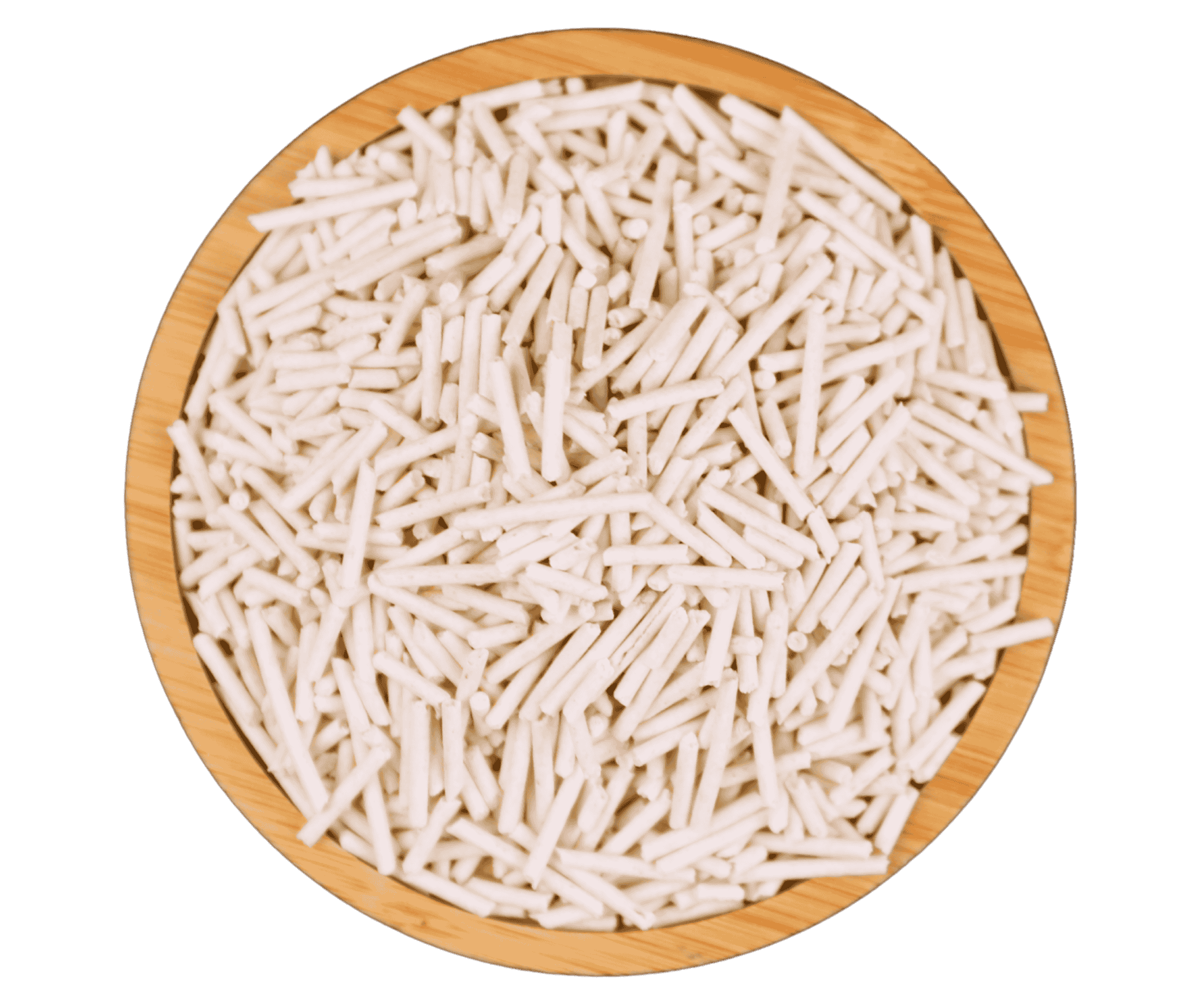
Advanced plant-based cat litter offers a fundamentally different solution. By using natural bio-enzymes, it actively breaks down ammonia and odor-causing compounds at the molecular level.
This biological approach is widely used in waste treatment and environmental management, as supported by studies from the National Institutes of Health.
This process ensures true odor elimination rather than temporary coverage.
With modern production technology, high-quality plant-based litter can deliver consistently high deodorization performance, creating a cleaner and more stable indoor environment.
Why This Difference Matters
For buyers and distributors, the difference between masking and eliminating odor directly impacts product competitiveness.
Litter that only masks odor often results in lower customer satisfaction and higher replacement frequency.
In contrast, odor-eliminating solutions improve user experience, extend usage cycles, and strengthen brand trust.
Conclusion
The future of cat litter is not about stronger fragrance, but about smarter odor control technology.
Shifting from masking to elimination is not just a product upgrade—it is a change in how the problem is solved.
For brands looking to stand out in a competitive market, choosing the right approach can make all the difference.