+86 15253215219

- 29 Mar 2026
How Bio‑Enzyme Deodorization Works in Cat Litter
Why Odor Control Is a Core Challenge in Cat Litter
Cat litter odor is one of the biggest concerns for pet owners and distributors alike. Most traditional litter products attempt to hide smells using fragrance or absorb them with materials like activated carbon. However, these methods often provide only temporary relief. As pet owners increasingly demand natural and chemical‑free solutions, the industry has begun shifting toward biological odor control technologies. One of the most promising approaches is bio‑enzyme deodorization. Instead of masking odors, enzymes work by breaking down the organic compounds that generate unpleasant smells in the first place.
What Causes Cat Litter Odor?
Most litter box odor originates from the decomposition of cat urine and feces. When bacteria break down urea in urine, ammonia gas is released. Fecal waste can also produce sulfur‑based compounds and volatile organic molecules. These substances accumulate quickly if moisture remains in the litter or if waste is not isolated effectively. Because odor formation is fundamentally a biological process, many experts believe the most effective solution is to interrupt this process at the molecular level.
Veterinary guidance on odor sources can be found in PetMD’s litter box odor guide
What Is Bio‑Enzyme Deodorization?
Bio‑enzymes are natural biological catalysts that accelerate chemical reactions. In cat litter, specific enzymes help break down organic compounds such as proteins, urea, and other waste molecules before they transform into odor‑producing gases.
Key Mechanism of Enzyme Deodorization
Unlike fragrance‑based systems that simply mask smells, enzymes convert odor‑causing molecules into smaller and less volatile substances. This process reduces ammonia formation and slows bacterial growth.
For a scientific overview of enzyme functions, see Britannica’s explanation of enzymes
Why Enzyme Technology Is Growing in the Cat Litter Industry
As consumer awareness of natural pet care grows, many cat litter manufacturers are moving toward plant‑based materials combined with biological deodorization technologies. Enzymes are especially attractive because they work continuously, decomposing odor molecules rather than covering them with synthetic fragrance.
How Gilancy Applies Bio‑Enzyme Technology in Cat Litter
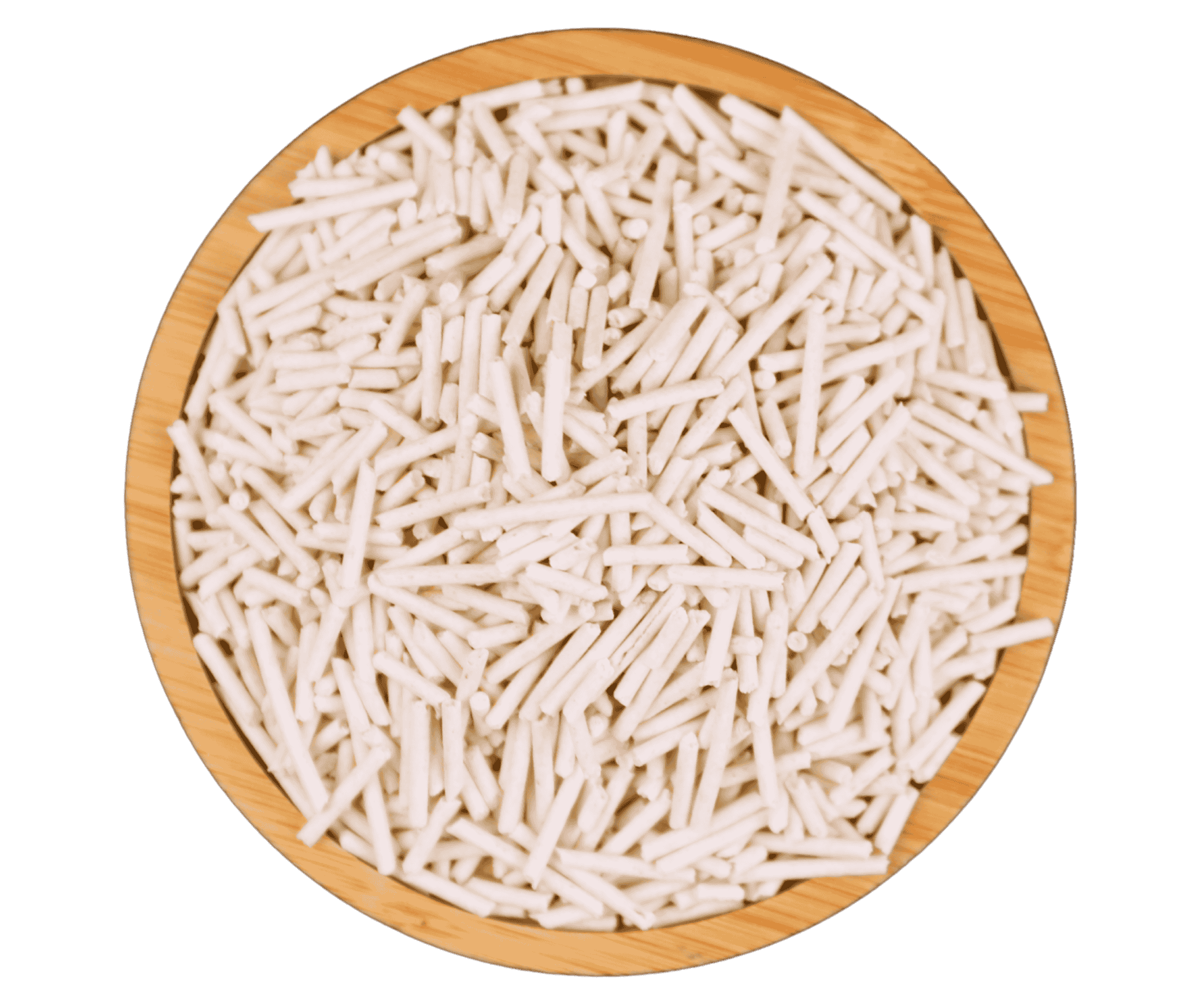
Qingdao Gilancy Pet Products Co., Ltd. integrates bio‑enzyme deodorization into its plant‑based cassava cat litter system. Instead of relying solely on physical adsorption, the litter formula combines starch absorption with biological decomposition of odor molecules.

Plant‑Based Structure Supports Enzyme Activity
Gilancy cassava cat litter uses cassava starch and corn starch as its core ingredients. The porous starch structure rapidly absorbs moisture, creating an environment where bio‑enzymes can efficiently interact with organic waste.
Enzyme + Natural Deodorizing Components
In Gilancy’s formula, bio‑enzymes work together with natural deodorizing ingredients such as seaweed extract. This combined system helps neutralize ammonia while reducing the formation of new odor molecules, achieving deodorization performance of ≥98.1%.
Manufacturing Technology Protects Enzyme Activity
Gilancy uses a hydraulic dry‑forming production method that avoids high‑temperature drying. This low‑temperature process helps preserve enzyme activity and ensures that the biological deodorization system remains effective in the final product.
Stable Supply for Global Pet Brands
With an annual production capacity of approximately 50,000 tons of plant‑based litter, Gilancy is able to supply international distributors and private‑label pet brands with consistent quality and stable export volumes.
Related Resources
Gilancy Cat Litter Manufacturer Homepage
Cassava Cat Litter Product Page
Guide: Choosing a Reliable Cat Litter Manufacturer
FAQ
1. What is bio‑enzyme deodorization in cat litter?
It is a biological process where enzymes break down organic waste molecules before they produce odor‑forming gases such as ammonia.
2. Are enzyme‑based cat litters safe for cats?
Yes. Most litter enzymes are naturally derived and considered safe for pets.
3. Why does enzyme litter reduce odor better than scented litter?
Because enzymes remove the chemical source of odor instead of masking it.
4. What factors affect deodorization performance?
Absorption speed, clumping efficiency, moisture control, and enzyme activity all influence odor control performance.